
CONTACT US
Graphs, Ontologies, and the Room Where It’s Happening: KGC 2026

If you were on Roosevelt Island the week of May 4th, you might have spotted a few familiar faces scurrying toward the Cornell Tech campus and wondered: where are all these graph folks going?
The KGC, of course. The 8th Knowledge Graph Conference was packed with practitioners spanning every corner of the graph world: graph theory, network science, RDF-based (Resource Description Framework) knowledge graphs, and LPG-based (Labeled Property Graph) technologies. This year’s theme was “Make your enterprise data AI ready.” That’s a phrase we’re unpacking — what does it actually mean, what does it look like in practice, and how do you get there? Here are our takeaways from the talks, workshops, and hallway conversations.

How to get started in money laundering
Unsurprisingly, the room for Paco Nathan’s workshop filled up fast — and he delivered. His hands-on tutorial walked attendees through the Azerbaijani Laundromat: $2.9 billion laundered through four UK shell companies via Danske Bank in Estonia, involving Azerbaijani government officials, Russian state-owned arms exporters, and European politicians collecting bribes. The case was leaked to journalists through 17,000 transactions, most of them not originally in digital formats. The dataset used was the well-known OpenSanctions dataset.
Beyond being a great introduction to detecting fraud with graphs, the workshop made a point that stuck with us: you do not need to deploy a full graph database to get meaningful insight from your data. For a dataset this size, loading it into NetworkX takes minutes, and basic graph algorithms — degree centrality, betweenness, community detection — can immediately surface the structure of a network. The patterns were visible the moment Paco opened a notebook and drew the graph.
It is easy to walk away from a conference thinking you need a full deployment before you can start. Many enterprise vendors push the narrative of “getting your data AI ready,” and while clean, actionable data matters, Paco’s presentation delivered a useful reminder that a Python notebook and a modest dataset can already tell you a lot.
Synthesis, however, still requires human logic. Graph algorithms can tell you who the connectors are; they do not tell you why. The bridge from pattern detection to actionable conclusion still runs through domain expertise. But — and it’s a big but — graph-on-relational architectures and agents that can reason over transaction data are shortening that bridge. If agents can surface the inferences a good investigator makes in the first ten minutes with a notebook, then detecting things like money laundering rings could become significantly faster.
Avengers, assemble
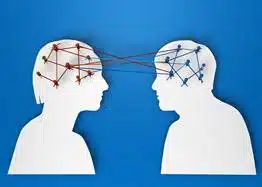
For us, the most exciting part of the conference was who was in the room. The graph field is made up of several subfields, each with its own tools, vocabulary, and accumulated expertise: graph theory and network science, RDF-based knowledge graphs, property graph technologies, and graph neural networks (GNNs). What KGC made clear this year is that the appetite for AI has started pulling all of them into the same conversation. Each subfield brings something the others need. The semantic web community brings rigorous modeling and interoperability. GNN researchers bring learned representations and scalable inference. Network science practitioners bring graph algorithms and pattern detection.
Seeing these communities in conversation — rather than in parallel tracks — was a highlight of the week. You could feel it in the hallways as much as on stage: a machine learning engineer asking an ontologist about upper ontologies, a fraud detection team comparing notes with healthcare AI researchers.
The talks reflected this convergence. Giuseppe Futia’s session on GraphRAG for healthcare AI showed how symbolic and statistical approaches reinforce each other: the ontology provides structure and privacy guarantees while GNN-enhanced reranking provides learned similarity — together, they outperform either approach alone. Agrita Khattar’s architecture session treated Kafka, Flink, and graph databases as natural partners for real-time fraud detection, designing for sub-second connectivity and the inherently open-world nature of financial crime. Morgan Stanley and EK presented an ontology-driven risk reporting platform built for production-scale regulatory use, framing ontology not as a modeling exercise but as a business continuity decision — applications come and go, but the data should be consistent.
The cross-disciplinary convergence happening across these conversations feels like the most important thing going on in this space right now. The technical pieces have been maturing in parallel for years. What changes when the community starts integrating them is not just what individual systems can do — it is what becomes possible when they are connected. After all, is that not the point of graphs?

We are all ontologists now
That phrase came from Evren Sirin’s keynote. His argument was direct: the problems that stalled semantic web adoption for a decade — skills gaps, modeling paralysis, knowledge sitting static and isolated in systems that never talked to each other — are exactly the problems AI is running into at scale right now. Agents are only as good as what you feed them. And what most enterprises feed them is fragmented, siloed, and semantically inconsistent.
Jessica Talisman put numbers on it. 89% of firms report no measurable productivity impact from AI after three years of investment. Experienced developers were actually slower with AI coding tools in controlled trials. Her argument: most organizations are treating AI as a data problem when it is a knowledge problem. Data and knowledge are not the same thing, and more data does not scale. What scales is structured context — properly governed — with shared definitions and clear provenance.
Kiryakov and Popov from Graphwise traced the broader market arriving at the same conclusion. Gartner, Deloitte, and McKinsey are all explicitly naming knowledge and context engineering as the differentiating capability in enterprise AI deployments. Microsoft Fabric IQ names the semantic backbone in its architecture. Palantir and NVIDIA are collaborating on ontologies. The enterprise software market is quietly converging on something the semantic web community has been arguing for twenty-five years.
None of this means the hard problems are solved. Jon Curtis’s talk on representing time was a sharp reminder of how much careful thought even seemingly basic questions still require. When you model temporal relationships imprecisely — or fail to account for what happened before an event without knowing exactly when — your agent doesn’t just get the answer wrong, it reasons confidently from a flawed foundation. The conceptual work to get the context correct is not going away. But the tooling is catching up. Veronika Heimsbakk’s maplib (Data Treehouse) showed what a Python-first, Polars-native RDF pipeline looks like when built for practitioners rather than theorists: fast, composable, and grounded in standards — proof that the gap between theory and practice is closing. The tools are here. The question is no longer whether to think like an ontologist — it is how to get there.
Final Thoughts
It has been a busy couple of weeks — from OptimizedAI in Atlanta at the end of March, to ODSC East and KGC back-to-back in the first weeks of May — but the content was worth every mile. Each conference reinforced something the others echoed: the pieces are here, the community is converging, and the teams pulling ahead are the ones who stopped waiting for perfect conditions and started building.
The energy at KGC this year was a reminder that the conversation is already happening — the question is whether your team is part of it. Graph practitioners from across subfields are figuring out how to work together. Enterprise teams are building semantic backbones under real production pressure, not as R&D experiments. The tooling, from a Python notebook to a production-grade RDF pipeline, is good enough to start today.
So, don’t be afraid to start. Define your terms, model a domain carefully, find the people at the edges of your field who are solving adjacent problems. You will discover, along the way, that the community around this technology is one of its best features. And though that is a journey worth taking together.
If you want to explore what this looks like in practice for your organization, get in touch with the Graphable team.
Graphable specializes in applied AI, graph databases, and data engineering. We help organizations move from AI experimentation to production-grade systems that deliver real business outcomes.
Graphable helps you make sense of your data by delivering expert analytics, data engineering, custom dev and applied data science services.
We are known for operating ethically, communicating well, and delivering on-time. With hundreds of successful projects across most industries, we have deep expertise in Financial Services, Life Sciences, Security/Intelligence, Transportation/Logistics, HighTech, and many others.
Thriving in the most challenging data integration and data science contexts, Graphable drives your analytics, data engineering, custom dev and applied data science success. Contact us to learn more about how we can help, or book a demo today.
We are known for operating ethically, communicating well, and delivering on-time. With hundreds of successful projects across most industries, we thrive in the most challenging data integration and data science contexts, driving analytics success.
Contact us for more information:


