
CONTACT US
Why Analytics Team as a Service for BI Initiatives? 8 Pain Points ATaaS Solves


The world of analytics is changing every day. Business intelligence isn’t the only goal anymore. Its purpose is to help organizations use their tools, resources, budgets, and decisions to reach real business impact. Many organizations still struggle to get the most out of BI because in the current landscape it takes more than dashboards or skilled analysts. It also needs strategy, good governance, the right setup, business understanding, and a way to tie data work to what leaders care about most.
It’s hard to build success on a weak foundation. If analytics have unclear ROI, bad KPIs, disconnected systems, or poor adoption, the problems only get worse and more costly over time. BI projects that once helped can end up causing confusion. People stop trusting the numbers, costs rise, key team members leave, work is repeated, and leaders hesitate to make decisions.
Most companies try to fix this the same way: hire more. But price out what a real analytics function actually costs — one data engineer, one data scientist, one BI analyst, one data architect — and you’re already at roughly $510,000 to $545,000 a year in salary alone, before benefits, payroll tax, and recruiting fees add another 20 to 35% on top. And that’s before anyone touches a tool; the average company is now running dozens of platforms across its data and analytics stack, with recent research on enterprise AI tooling alone putting the count at over 20 distinct tools, each of which needs someone who actually knows it.
Even with that budget, the harder problem is supply. The people who are genuinely good at graph data modeling, or Domo administration, or LLM evaluation, or pipeline architecture, mostly aren’t sitting on the job market. They’re already employed full-time somewhere, or they’ve deliberately built independent practices because they don’t want one employer. A job posting won’t get you that person. Only a network that already has them will.
That’s why Graphable created Analytics Team as a Service, or ATaaS: a federated model that gives organizations access to a bench of Graphable experts — in analytics, data engineering, BI, data science, graph technology, and generative AI — including specialists you’d rarely be able to hire directly. Instead of building a full in-house team, you get the right experts when you need them, and can adjust support as your needs change.
The first year of setting up an analytics platform might call for several full-time-equivalent staff. In later years, you may need less hands-on work but still need strategy, maintenance, and training. ATaaS is built to help you plan BI investment around that reality, instead of over-hiring, understaffing, or leaning on a single person.
Here’s how that plays out against the pain points ATaaS is built to solve.

1. Questionable ROI on BI Initiatives
Many BI initiatives lack clear, demonstrable ROI. When you add up costs licenses, setup, staff, storage, processing, governance, maintenance, integrations, ongoing reporting most organizations struggle to answer one question: is this investment paying off? The problem gets worse as BI initiatives age. A platform or dashboard that once fit well may lose effectiveness as business processes, data, systems, leadership, or the analytics champion who built it all change. Without purposeful maintenance, even solid BI drifts from business needs.
The fix isn’t more dashboards. It’s a regular discipline an initial audit, periodic check-ins, executive reporting, quarterly reviews that keeps spend tied to whether people, tools, data, and process are actually making a difference.

2. The Talent You Need Isn’t Looking for a Job
Many people can work with data and find answers. Fewer can connect those answers to the real reasons behind the business — and fewer still are available to hire.
Good BI takes more than technical skill. It means understanding how finance, sales, marketing, and leadership each see value, and how their KPIs connect across the company. An analyst might know how to build a report but not whether it answers the right question. A dashboard developer can show trends but may not see how they hit profit or growth. A data engineer can move data but not know which of it actually matters to leadership.
That mix is the hardest thing to hire for directly, because the people who have it are rarely on the market. They’re already full-time somewhere else, or they’ve built independent practices on purpose. A federated model is really the only way to reach that pool: instead of one or two generalist hires, ATaaS gives you a team with experience across industries and tools, drawn from specialists you couldn’t recruit through a normal job posting even with an open budget.

3. Ballooning Costs — Maintaining ROI in a Changing Data Environment
Data costs are rising fast. Cloud platforms, SaaS tools, pay-as-you-go pricing, bigger data sets, duplicate data, and more storage all add up over time. This creates a real challenge: even useful BI can become inefficient BI.
Organizations need to ask questions such as: Do we need to copy all of our data into a BI platform? Can some data remain in its native storage environment? Are we duplicating datasets unnecessarily? Are we using the right architecture for our current and future needs? Are Snowflake, Databricks, Domo, Power BI, Tableau, or another platform being used cost-effectively? Are we optimizing pipelines, storage, and processing around actual business usage?
The answer isn’t always a bigger platform or more dashboards. Sometimes it’s better design, cleaner data flows, stricter rules, less duplicate data, or tighter KPI management — matching data spend to real business results instead of growing it by default.

4. Lack of a Holistic Approach
BI projects often get stuck in one department. One team pays for the platform, another owns the data, and a third uses the reports. Leaders want a full view, but data and costs are spread out across the company — teams duplicate work, departments define metrics differently, data ownership is unclear, dashboards compete with one another, leadership loses confidence in reporting, and costs land on one cost center while value gets created somewhere else.
A holistic view — looking at the whole company’s setup, rules, data design, integration, KPIs, and reporting needs together — significantly improves ROI by cutting redundant effort and giving the business a single trusted source for decisions, instead of a separate dashboard for every department.
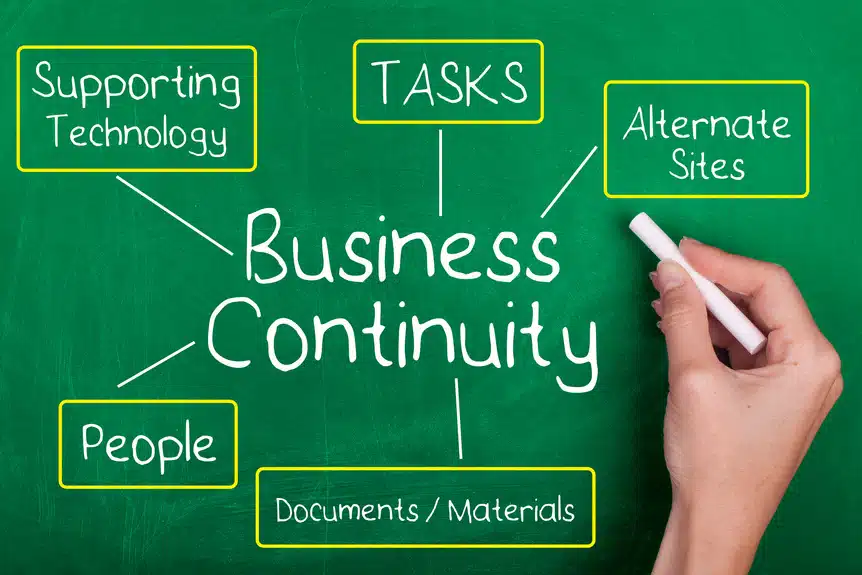
5. Continuity — What Happens When One Person Leaves
This is a real risk for companies running analytics with just a few people. If one leaves, it can disrupt reporting, break undocumented processes, delay projects, or leave leadership without support. Even a great analyst can take months or years of institutional knowledge out the door with them.
A team-based model spreads that risk out. Instead of depending on one person’s memory, the work is backed by documentation, cross-training, and a steady process across the whole bench, so nothing is stuck in a single head.

6. Budgeting — Committed Capacity That Never Goes to Waste
One thing that trips up a lot of companies considering a model like this: what happens to the hours you’ve paid for if your needs change mid-year?
ATaaS is structured so a committed block of capacity isn’t a use-it-exactly-as-planned-or-lose-it arrangement. If a project accelerates and you burn through your allocation faster than expected, you top it off. If a quarter runs quieter than planned, the hours don’t just evaporate — we identify backlog work to apply them to instead: platform hygiene, pipeline cleanup, the ongoing operations and maintenance that always exists but rarely makes it to the top of anyone’s list. The engagement flexes around what’s actually happening in the business, including the parts — like closing out the fiscal year alongside every other year-end priority — that never fit neatly into a project plan.
The result: the value of the payment shows up no matter how the year actually goes, not just in the scenario it was originally budgeted for.

7. Chicken before the egg – Where to start
Many analytics projects start with the tool, not the problem. Vendors may want every process to fit their software, but that’s not always how real work happens. Take finance, for example: vendors may show off polished dashboards, but plenty of teams still use Excel for some tasks — and that’s fine.
The goal isn’t to force everyone into one tool. It’s to help people make better decisions with the right mix of tools, processes, and data: when to use a BI platform, when to use Excel, when to automate, integrate, simplify, or redesign a process. Good analytics should make a team’s work easier, not force it to change how it works for no reason.

8. AI and LLM Modeling — Turning Data Readiness into AI Readiness
Analytics is moving beyond dashboards and reports. Organizations now want to know how their data can support generative AI, large language models, agents, semantic search, recommendations, and knowledge graphs. But AI can’t work well if the data underneath it is messy, disconnected, or poorly managed — LLMs and agents need context: clean data, clear relationships, strict rules, clear ownership, and reliable data flows. Without that, AI projects give incorrect answers, create security risk, and produce poor results.
That means strengthening the same foundations modern AI systems require: clean, governed pipelines; clear ownership of critical datasets; reliable KPI and metric definitions; connected data models; a knowledge graph strategy where it fits; architecture that supports both analytics and AI; secure and scalable data access; and model evaluation and feedback loops tied to real business use cases.
For companies exploring LLMs or agentic AI, the question isn’t just “which model should we use?” The better question is “is our data ready to support the outcomes we want?” — and that’s a BI and data engineering question before it’s ever a model question.

ATaaS – the Solution
Business intelligence should make things clearer, not more confusing. It should help you make better decisions, not cause arguments about the numbers. It should make work smoother, not add more tools, costs, or disconnected processes.
Graphable’s Analytics Team as a Service gives you access to the strategy, engineering, analytics, data science, and AI expertise a real analytics function requires, without the cost or hiring risk of building all of it in-house. We’ve worked with clients across financial services, life sciences, security and intelligence, transportation and logistics, high tech, manufacturing, and more.
If any of this sounds familiar — disconnected dashboards, unclear KPIs, rising data costs, a team that’s one departure away from a bad quarter — the free DO Assessment is a low-pressure way to see where your data operations actually stand before deciding what to do next.
Graphable helps you make sense of your data by delivering expert analytics, data engineering, custom dev and applied data science services.
We are known for operating ethically, communicating well, and delivering on-time. With hundreds of successful projects across most industries, we have deep expertise in Financial Services, Life Sciences, Security/Intelligence, Transportation/Logistics, HighTech, and many others.
Thriving in the most challenging data integration and data science contexts, Graphable drives your analytics, data engineering, custom dev and applied data science success. Contact us to learn more about how we can help, or book a demo today.
We are known for operating ethically, communicating well, and delivering on-time. With hundreds of successful projects across most industries, we thrive in the most challenging data integration and data science contexts, driving analytics success.
Contact us for more information:


